K-Beauty Guides
What Is REBORNIC Calcium? Dr. Melaxin Cemenrete Explained
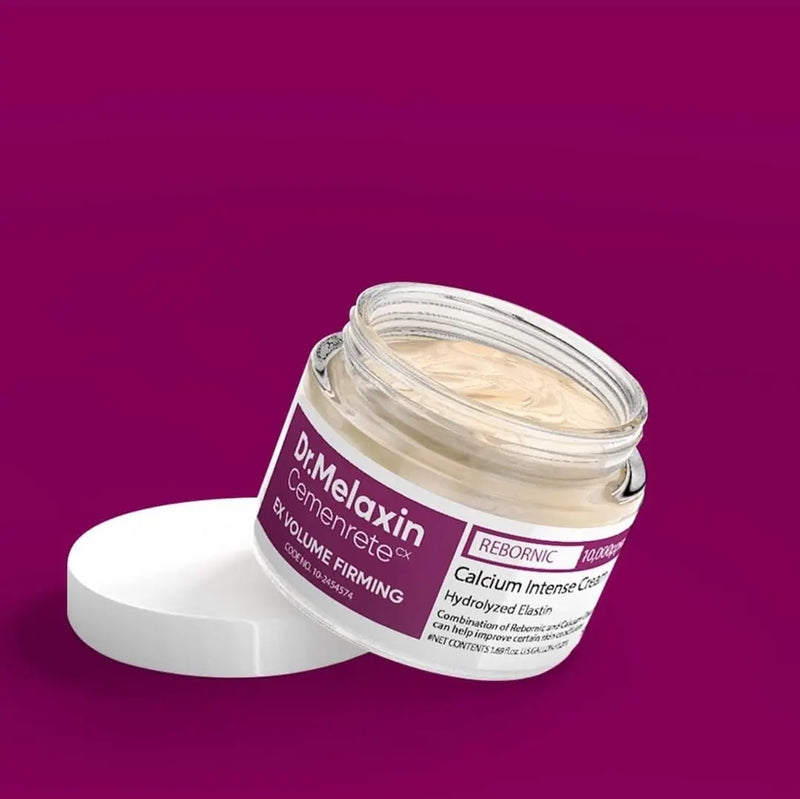
REBORNIC is the name Dr. Melaxin gives to the patented “skin calcium” concept at the heart of its Cemenrete products, and on ingredient labels it shows up as mineral salts such as calcium gluconate and magnesium gluconate. In plain terms, the calcium stick and its sister products are hydrating, cushioning formulas built around minerals that play a real role in how skin renews and protects itself, though topical calcium is not a proven way to rebuild volume.
This guide is about the ingredient, not the shopping list. If you want a tour of every Dr. Melaxin product, our full range explainer covers that, and our multi balm stick guide covers the stick format itself. Here we decode what “calcium skincare” actually means, from the lab bench to your bathroom shelf in Toronto, Vancouver or Chicago.
Quick answer: REBORNIC is Dr. Melaxin’s trademarked name for a calcium-focused complex. The brand does not publish its exact recipe, but Cemenrete ingredient lists include calcium gluconate, magnesium gluconate, potassium magnesium aspartate and sodium glycerophosphate. Calcium helps regulate how the outer skin layers mature and form a barrier, yet there is little published evidence that calcium applied in a cream travels where it is needed. Expect hydration and a smoother, plumper look, not a filler effect.
What “REBORNIC” and “Cemenrete” actually mean
Cemenrete is a brand-made word that blends “cement” and “concrete”, a hint at the idea of reinforcing skin the way mortar holds bricks together. REBORNIC (sometimes spelled “Ribornic” on reseller pages) is the patented calcium concept that Dr. Melaxin says sits inside several Cemenrete formulas. Retailer descriptions call it “skin calcium” or “ionized calcium” and connect it to elasticity, firmness and the look of fine lines.
What the brand does not do is publish a full breakdown of the patent, its concentration or the testing behind it. So the most honest way to understand REBORNIC is to read the ingredient lists (the INCI) printed on the boxes. Those lists are legally required in both Canada and the USA, and they tell us what is really in the bottle.
The mineral ingredients you will see on the label
- Calcium gluconate: the calcium salt of gluconic acid. Ingredient databases class it as a humectant and skin-conditioning agent.
- Magnesium gluconate: the matching magnesium salt, used as a skin-conditioning mineral.
- Potassium magnesium aspartate: a mineral salt of the amino acid aspartic acid, often listed as a buffering and conditioning ingredient.
- Sodium glycerophosphate: a phosphate source frequently paired with mineral complexes in Korean formulas.
These four appear together in the Cemenrete Calcium Intense Cream and the Cyano Pink Spicule Serum, which strongly suggests they form the backbone of the calcium story. They sit low on the lists, below water, glycerin, oils and humectants, which is typical: minerals work at small percentages.
The skin’s calcium gradient, in simple terms
Your epidermis is not a uniform sheet. Cells are born in the bottom (basal) layer and slowly move upward, flattening and hardening until they become the protective outer layer, the stratum corneum. Calcium acts like a traffic signal along that journey.
- In the lower layers, calcium levels are relatively low, which keeps cells in a growing, dividing state.
- Higher up, in the granular layer, calcium concentration peaks. That spike tells cells to mature, build structural proteins and release the fats (ceramides, cholesterol and fatty acids) that form the barrier.
- In the outermost layer, calcium drops again.
Dermatology research describes this pattern as the epidermal calcium gradient. When the barrier is damaged, for example by over-exfoliating, harsh cleansers or the dry indoor heating of a Canadian January, the gradient flattens. The skin reads that as an alarm and speeds up barrier repair. Once the barrier recovers, the gradient returns.
Where magnesium fits
Magnesium is involved in many enzyme reactions in living cells, and small studies on mineral-rich water and magnesium salt baths have reported improvements in skin hydration and roughness in people with dry skin. Some lab work also suggests that the balance between calcium and magnesium influences how quickly the barrier recovers. These findings are interesting, but they come from small or early studies, not from tests of any specific Dr. Melaxin product.
What the evidence supports, and its limits
It is tempting to read the gradient science and assume a calcium cream “refills” the skin. The reality is more modest.
| Claim you may see | What science supports | Limit to keep in mind |
|---|---|---|
| Calcium helps build the skin barrier | Yes, calcium signalling is central to barrier formation inside the epidermis | That is calcium already inside your skin, regulated by your body, not from a jar |
| Topical calcium boosts collagen | No solid published human evidence for calcium salts in creams | Collagen claims on boxes are marketing unless backed by named studies |
| Calcium gluconate hydrates | It is classed as a humectant and conditioning agent | The heavy lifting is usually done by glycerin, hyaluronic acid and oils in the same formula |
| Magnesium soothes dry skin | Small studies on magnesium-rich water and salts show hydration benefits | Concentrations and delivery differ from a leave-on cosmetic |
| Calcium restores volume | Not supported | Lost volume comes from fat, bone and collagen changes that no topical can replace |
So what does a calcium formula realistically do? The Cemenrete products surround their minerals with proven moisturizers: glycerin, three forms of hyaluronic acid, tremella mushroom extract, shea butter and plant oils in the cream, plus niacinamide and adenosine, two ingredients with a stronger track record for the look of tone and fine lines. The combined result is skin that feels more cushioned and looks smoother. That is a worthwhile outcome, as long as you know where it comes from.
Which Cemenrete products are built on the calcium concept
Dr. Melaxin positions the whole Cemenrete family around calcium, but labels and descriptions differ by product and market. Here is how the line maps to the ingredient, based on published ingredient lists and retailer descriptions.
- Cemenrete Calcium Multi Balm (the “calcium stick”): retailer pages credit REBORNIC by name. It is a portable, oil-rich balm for dry spots, smile lines and the neck.
- Cemenrete Calcium Intense Cream: its INCI shows calcium gluconate, magnesium gluconate, potassium magnesium aspartate and sodium glycerophosphate, plus shea butter and macadamia oil. The richest everyday option.
- Cemenrete Cyano Pink Spicule Serum: the description names REBORNIC alongside vitamin B12 (cyanocobalamin, which gives the pink colour) and spicules. Lighter, and it tingles.
- Cemenrete Calcium Volume Eye Patch and Cemenrete Eye Cream: eye-area formats within the same calcium family. Check the box for the exact INCI of your version.
- Cemenrete Picotonic Shot: a tone-focused ampoule sold under the Cemenrete name; it targets the look of dark spots rather than dryness.
What the calcium stick does (and does not do)
“What does the calcium stick do?” is one of the most searched Dr. Melaxin questions. The short version: it deposits a thin occlusive film of oils and waxes that slows water loss, delivers humectants and the mineral complex, and gives a dewy, smoothed look to areas that crease. Because the film fills in surface dryness, fine lines can look softer within minutes. That is an optical and hydration effect.
It does not lift sagging skin, erase deep folds, dissolve eye bags or replace in-office treatments. If you are noticing sudden puffiness, swelling or a change in one area only, see a doctor or pharmacist rather than reaching for a balm.
How to fit a calcium product into your routine
- Start with clean, slightly damp skin. Humectants work best when there is water to hold onto.
- Serum before cream. If you use the Cyano Pink serum, apply it first, then the Intense Cream or your usual moisturizer.
- Balm last. Swipe the stick over the top of skincare, or over makeup during the day, on dry patches only.
- Morning means sunscreen. Calcium does nothing against UV damage, which is the biggest driver of visible ageing. In the USA, sunscreens are regulated by the FDA; in Canada, by Health Canada. Our Korean sunscreen guide explains the labels.
- Patch test. Try a new product behind the ear or on the jaw for a few days, especially if you have sensitive skin.
Calcium formulas are especially handy in North American winters, when furnace heat and wind strip moisture. Readers in the UK or Australia dealing with air conditioning or hard water may also notice the cushioning effect. For a full cold-weather plan, see our Korean winter skincare routine.
Who will get the most out of calcium skincare
- Dry or dehydrated skin that feels tight by mid-afternoon.
- Mature skin where fine lines look deeper when skin is dry.
- Anyone whose barrier feels stressed after retinoids or exfoliating acids, as long as no active irritation remains.
Very oily or breakout-prone skin may find the cream and balm too rich; the serum is the lighter entry point. If you have eczema, rosacea or a diagnosed skin condition, ask a dermatologist or pharmacist before adding new products.
Frequently asked questions
Is REBORNIC an ingredient I can find on the label?
Not usually under that name. REBORNIC is a trademark, so the label lists the individual ingredients instead. Calcium gluconate and magnesium gluconate are the clearest signs of the calcium complex.
Can calcium in a cream reach the deeper layers of skin?
There is little published evidence that it does in meaningful amounts. Calcium salts are water-soluble and charged, which makes it hard for them to cross a healthy barrier. Treat the calcium as a supporting player, not the star.
Does calcium skincare help with wrinkles?
It can soften the look of dryness-related fine lines by keeping skin hydrated. Deeper wrinkles respond better to daily sunscreen and evidence-based ingredients such as retinoids, which you can discuss with a dermatologist.
Is calcium gluconate safe for sensitive skin?
It is generally considered gentle at cosmetic levels. Reactions usually come from other parts of a formula, such as fragrance or plant extracts, so a patch test is still wise.
Can I use the calcium stick with a spicule or exfoliating product?
Yes, but space them out. Apply a tingling or exfoliating step first, let it settle, then seal with the balm. Skip the active step altogether if your skin stings or looks red.
REBORNIC calcium is best understood as a mineral-based moisturizing concept wrapped in clever branding. The biology behind calcium and the skin barrier is real; the leap from that biology to a jar is not yet proven. Choose a Cemenrete product for comfort, hydration and a smoother look, protect your skin from the sun, and keep your expectations grounded.
melaxin.ca is an independent guide. We may earn a commission from qualifying purchases. This article is for information only and is not medical advice.