K-Beauty Guides
Korean Glass Skin Routine for North American Climates
Glass skin is the Korean term for a complexion that looks smooth, evenly hydrated and softly reflective, like light bouncing off a clean pane of glass. You get closer to it with gentle exfoliation, several thin layers of hydration and daily sunscreen, adjusted to the air you actually live in, not with heavy makeup or a single miracle product.
Most glass skin tutorials assume a mild, humid climate. North America is far less forgiving: Canadian and Midwestern winters dry skin out, the Southeast and Gulf Coast stay sticky for months, and many cities have hard tap water. This guide shows how to build a realistic glass skin routine and tune it for each of those conditions.
Quick answer: A practical glass skin routine is: gentle cleanse, a hydrating or lightly exfoliating toner, one or two watery serums, a moisturizer matched to your climate and broad-spectrum sunscreen every morning. Add a gentle rice peel once or twice a week. In dry winters, add more layers and a richer cream; in humid summers, use fewer, lighter layers; with hard water, rinse well and tone right after cleansing.
What glass skin really means (and what it does not)
Glass skin describes how well-hydrated, smooth skin reflects light. It is a look of health and texture, not a skin tone, and it does not mean poreless or perfect. Real skin always has pores, fine hair, some texture and occasional breakouts, and filtered photos have raised expectations far beyond what any routine can deliver.
Three things create the effect:
- Hydration: water-plumped skin reflects light more evenly.
- Smooth texture: regular, gentle removal of dead surface cells reduces the dull, rough look that scatters light.
- Protection: daily sunscreen helps prevent the uneven tone and texture that UV causes over time.
Think of glass skin as a direction to move toward. Comfortable, hydrated skin with a soft glow is a great result, even if it never looks like a ring light photo.
The step-by-step glass skin routine
Already comfortable with a basic routine? This builds on it. If you are brand new, start with our Korean skincare routine for beginners for a few weeks before adding the extra glow steps below.
| Step | Purpose | Example on melaxin.ca | Frequency |
|---|---|---|---|
| Cleanse | Remove sunscreen, oil and residue without stripping | Any gentle, low-pH cleanser | AM (optional) and PM |
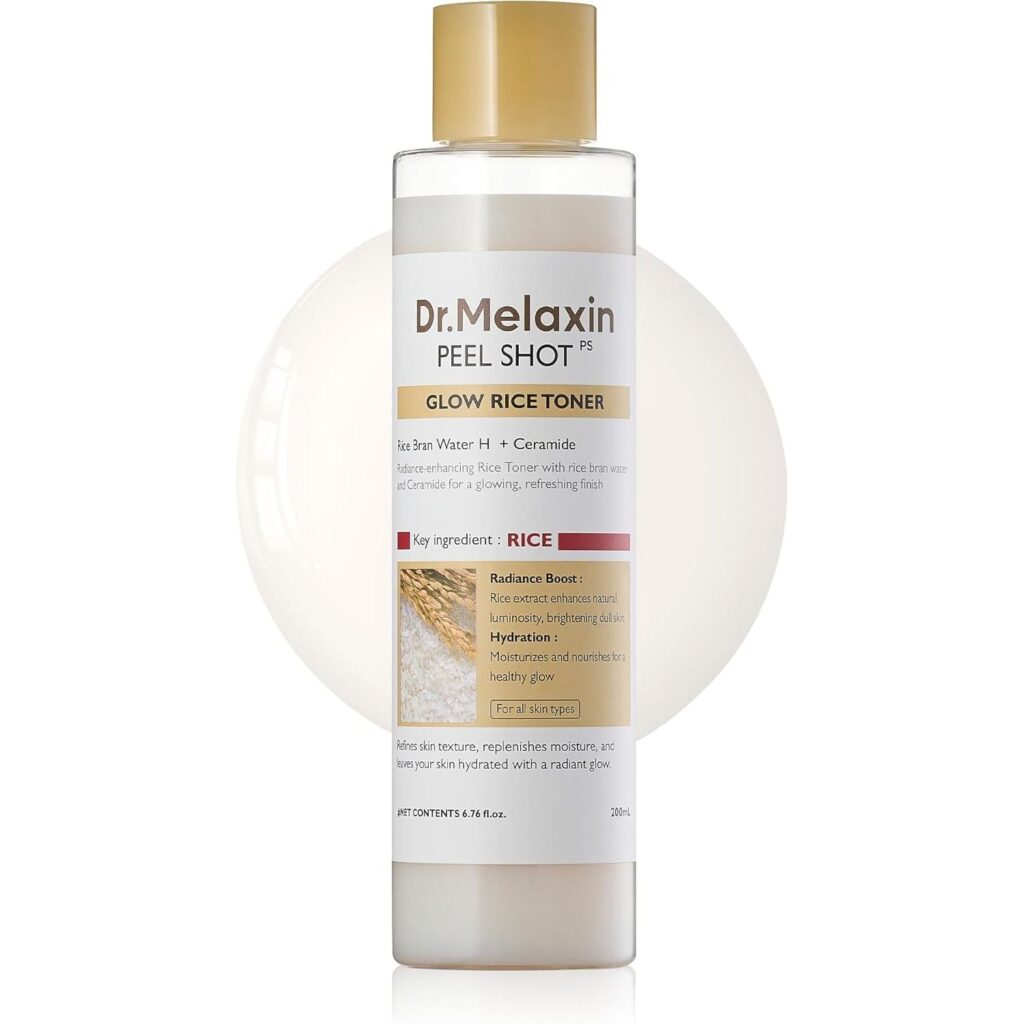
| Glow toner | Hydrate and lightly smooth texture | Dr. Melaxin Peel Shot Glow Rice Toner | Once or twice daily |
| Hydrating essence | Add a watery, plumping layer | numbuzin No.3 Super Glowing Essence Toner | Daily |
| Serum | Targeted hydration or brightness | A hyaluronic acid or niacinamide serum | Daily |
| Moisturizer | Seal in layers | Gel cream or richer cream by season | AM and PM |
| Rice peel | Gentle exfoliation for smoothness | Dr. Melaxin Peel Shot White Rice peeling | 1 to 2 times a week |
| Sunscreen | Protect the results | Broad-spectrum SPF for your market | Every morning |
1. Cleanse gently
Glass skin starts with a clean but comfortable surface. In the evening, use an oil or balm first if you wore sunscreen or makeup, then a mild water-based cleanser. If your face feels squeaky or tight, your cleanser is too strong for this kind of routine.
2. Use a glow toner
The Peel Shot Glow Rice Toner is built around rice-derived ingredients such as rice bran water, rice extract and rice amino acids, alongside niacinamide, panthenol, adenosine and hyaluronic acid. Retailers describe it as hydrating with gentle peeling ingredients. Sweep it on with a cotton pad, avoiding the eye area, then pat the rest in with your palms. Start once a day if you are using other exfoliants.
3. Layer a watery essence
This is the heart of the glass skin technique: thin layers absorb better than one thick one. Press in an essence, wait 30 seconds, and repeat if your skin still feels thirsty. Two layers are usually enough.
4. Add one serum
Choose a single focus. Hyaluronic acid or panthenol is ideal for a dewy look; niacinamide suits uneven tone and shine. Our guide to the best Korean serums for hydration compares the main ingredients.
5. Moisturize for your climate
The moisturizer is where climate matters most, and the next sections explain how to choose it.
6. Exfoliate gently, not often
A rice-based peel used once or twice a week helps lift dull surface buildup. If you are deciding between the brand’s two rice formulas, our comparison of Peel Shot White Rice vs Black Rice explains which suits glow and which suits congestion. Do not combine it with other strong acids or retinoids on the same night.
7. Finish with sunscreen every morning
Exfoliation and glow toners make sunscreen even more important. Apply a generous layer as the last skincare step, and reapply when you are outdoors.
Adjusting for dry winters: Canada, the Midwest and the Northeast
From Calgary and Winnipeg to Minneapolis, Boston and New York, winter brings freezing wind outside and dry, heated air inside. Glass skin in these months is about preventing water loss.
- Layer, then seal: two layers of toner or essence, a hydrating serum, then a cream with ceramides or squalane.
- Cut exfoliation back: one rice peel a week, and pause if skin stings.
- Apply to damp skin: press in each layer while the previous one is still slightly moist.
- Add a thin occlusive at night: a sleeping mask or a few drops of facial oil over moisturizer on very dry nights.
For the full cold-weather barrier routine, see our separate Korean winter skincare routine; here we only adjust the glow steps for it.
Adjusting for humid heat: the South and coastal summers
In Houston, Miami, Atlanta or New Orleans, and during muggy summers almost anywhere east of the Rockies, the challenge flips. Skin produces more oil, sweat mixes with heavy products, and too many layers feel suffocating. The glow you want can quickly become greasy shine.
- Fewer layers: glow toner, one essence, a gel moisturizer.
- Lighter textures: swap creams for gel creams or skip moisturizer on oily zones if your essence is enough.
- Blot, then refresh: blot midday shine before adding anything new.
- Choose a fluid or gel sunscreen that holds up to humidity, and reapply outdoors.
If you live in the dry Southwest, such as Arizona or Nevada, your skin may behave more like a northern winter all year: keep the extra hydrating layers and a richer moisturizer at night.
Hard water and glass skin
Hard water contains dissolved minerals such as calcium and magnesium. Many people in parts of the Prairies, Ontario, the Midwest, Texas and the Southwest notice that their skin feels tighter or less smooth after washing with it, often because soap can leave a filmy residue. Hard water is not dangerous, but it can work against a glass skin routine.
- Use a gentle, low-pH cleanser rather than bar soap.
- Rinse thoroughly with lukewarm, not hot, water.
- Apply toner within a minute of patting dry to help rebalance and rehydrate the surface.
- On very sensitive days, use a cleansing water or micellar product and minimize rinsing.
- Some people choose a shower filter; results vary, so judge by how your skin feels.
Do you need a glass skin kit?
Many shoppers search for a ready-made glass skin kit. Bundles can be convenient, but you do not need a branded set. Building your own lets you match textures to your climate and skin type, and replace only what runs out. A focused kit could be as simple as: the Glow Rice Toner, one hydrating essence, a moisturizer for your season, a gentle rice peel and a sunscreen you enjoy wearing.
Whatever you buy, introduce one product at a time, patch test for a few days and give each change at least three to four weeks. On sunscreen: in the USA, the FDA regulates sunscreens, and in Canada, Health Canada does, so choose one that is labelled for your country. Official Canadian sun safety information is on canada.ca. Readers in the UK and Australia should likewise pick a sunscreen sold for their market.
Frequently asked questions
How long does it take to get glass skin?
Hydration can make skin look fresher within days, but smoother texture usually takes several weeks of consistent, gentle care. Results depend on your skin, age, climate and habits.
Can oily skin get glass skin?
Yes, though it looks slightly different: a soft, hydrated sheen rather than a wet look. Use fewer, lighter layers and focus on balancing oil instead of adding more shine.
Is the Peel Shot Glow Rice Toner safe to use every day?
Retailers list it for morning and evening use, but if you also use a rice peel, acids or retinoids, start with once a day and watch for tightness or stinging.
Does glass skin work on all skin tones?
Absolutely. Glass skin is about texture and hydration, not lightening. Any skin tone can look smooth and luminous with the right care.
Why does my skin look greasy instead of glassy?
Usually too many rich layers for your climate or skin type. Remove one step, switch to a gel moisturizer and blot before reapplying anything.
The glass skin look is less about a strict number of steps and more about consistency, gentle exfoliation and layers that match your weather. Adjust the routine as seasons change, protect your progress with daily sunscreen, and aim for comfortable, healthy-looking skin rather than a filter.
melaxin.ca is an independent guide. We may earn a commission from qualifying purchases. This article is for information only and is not medical advice.