K-Beauty Guides
Spicule Serums Explained: Dr. Melaxin vs VT Reedle Shot
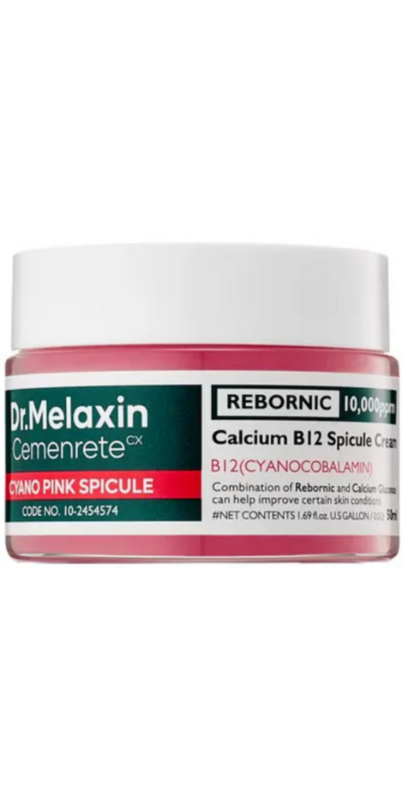
A spicule serum is a skincare product containing microscopic, needle-shaped particles from marine or freshwater sponges, usually listed as hydrolyzed sponge on the label. When you massage it in, those particles lodge in the outermost layer of skin, which creates the prickling sensation and is designed to help the rest of the formula absorb, but it is not the same as professional microneedling.
Products such as the Dr. Melaxin Cemenrete Cyano Pink Spicule Serum and the VT Cosmetics Reedle Shot range made the category famous on social media, and US and Canadian shoppers now search “dr melaxin microneedling serum” and “reedle shot” by the thousands. Below we explain the mechanism, the realistic results, the safety rules and how four popular options compare.
Quick answer: Spicules are tiny silica-based needles from sponges that sit in the top layer of skin and may make it more receptive to the ingredients applied with them. They tingle, they can cause redness, and they work only on the surface. Start with a gentle option like Reedle Shot 100 or the Cyano Pink serum two or three evenings a week, never on broken or irritated skin, and avoid layering them with strong acids or retinoids on the same night.
How sponge spicules work
Sponges build their skeletons from tiny structural needles called spicules. In skincare, manufacturers purify these needles, typically from silica-based (siliceous) sponges, and suspend them in a serum, essence or cream. Under a microscope they look like minuscule rods with pointed ends.
When you press and massage the product into your face, the spicules slip between and into the dead cells of the stratum corneum, the skin’s outer layer. Laboratory and animal studies on purified sponge spicules have shown that they can create temporary micro-channels in this layer and increase how much of a test ingredient passes through. Researchers have also noted that some spicules stay lodged in the surface for a day or more before shedding naturally with dead cells.
What that research does not show is that a cosmetic spicule serum reaches the dermis, triggers the wound-healing response of real microneedling, or produces collagen remodelling. The honest description is a surface-level delivery helper with a mild exfoliating effect.
Why it tingles
The prickling, warm or “sandy” feeling comes from the needles physically sitting in the skin. It usually fades within minutes to a few hours. Tingling is expected; burning, swelling, persistent stinging or blistering is not. If you notice those, rinse with cool water, stop using the product and speak with a pharmacist or dermatologist.
Spicules vs real microneedling vs chemical exfoliation
| Feature | Spicule serum | Professional microneedling | Chemical exfoliant (AHA, BHA, PHA) |
|---|---|---|---|
| How it works | Microscopic sponge needles lodge in the outer layer | Sterile needles puncture into the dermis in a controlled way | Acids loosen the bonds between dead surface cells |
| Depth | Stratum corneum only | Dermis, depending on needle length | Surface layers |
| Main goal | Smoother texture, better product absorption | Collagen remodelling, scars, texture | Brightness, smoothness, clearer pores |
| Sensation | Tingling or prickling | Numbing usually needed | Mild stinging possible |
| Downtime | Little, some redness | Redness for one to several days | Little at cosmetic strengths |
| Who performs it | You, at home | Trained clinician | You, at home |
In short, spicule products are best thought of as a texture-focused step that sits between a gentle exfoliant and a serum. If acne scars or deep texture are your main concern, a dermatologist can tell you whether in-office treatment is more appropriate.
Who should avoid spicule serums
- Anyone with active, inflamed acne, open cuts, cold sores or a sunburn.
- People with eczema, rosacea, psoriasis or a damaged barrier that already stings with ordinary products.
- Anyone who has just had a peel, laser, waxing, microneedling or other in-office procedure; ask your provider when it is safe to restart.
- Those using prescription retinoids or other prescription topicals, unless their prescriber agrees.
- Anyone who is pregnant or breastfeeding and unsure about a formula: check with a doctor or pharmacist.
For a broader approach to reactive skin, see our guide to Korean skincare for sensitive skin.
How often to use spicule products
Frequency depends on the product’s strength and your skin. Brand guidance for VT’s range is commonly given as: Reedle Shot 100 suitable for regular evening use, and Reedle Shot 300 used less often, at intervals of several days. The Dr. Melaxin options are milder in feel than the higher-strength Reedle Shots, but the same principle applies: build up slowly.
- Weeks 1 and 2: two evenings a week, on clean, dry skin.
- Weeks 3 and 4: increase to three or four evenings if there is no lasting redness.
- Ongoing: stay at the frequency your skin tolerates, and drop back during cold snaps, when winter air in Canada and the northern US can make skin more reactive.
Layering rules
- Apply after cleansing and toner, before moisturizer.
- Do not use exfoliating acids, retinoids or scrubs on the same night.
- Follow with a simple, soothing moisturizer.
- Wear broad-spectrum sunscreen the next morning, since freshly exfoliated skin is more vulnerable to UV.
- Do not combine two spicule products in one routine.
If you also use the Dr. Melaxin Peel Shot, alternate nights instead of stacking; our Peel Shot guide explains how that product works.
Comparing Dr. Melaxin Cyano Pink, VT Reedle Shot 100 and 300, and Necklinephalt
| Product | Format and size | Spicule source on label | Notable supporting ingredients | Feel and intensity | Best for |
|---|---|---|---|---|---|
| Dr. Melaxin Cemenrete Cyano Pink Spicule Serum | Pink serum, 30 ml | Hydrolyzed sponge | Vitamin B12 (cyanocobalamin), niacinamide, adenosine, hyaluronic acid, calcium and magnesium gluconate | Light tingle | Spicule beginners who also want hydration |
| VT Cosmetics Reedle Shot 100 | Essence, 50 ml | VT’s CICA Reedle spicule technology | Centella-focused soothing base | Mild; the entry level of the range | Regular use, first-time users |
| VT Cosmetics Reedle Shot 300 | Essence, 50 ml | CICA Reedle at a higher concentration | Centella-focused soothing base | Noticeably stronger prickle | Experienced users wanting a periodic texture boost |
| Dr. Melaxin Necklinephalt Neck Cream | Neck cream, 20 ml | Hydrolyzed sponge | Niacinamide, bakuchiol, arbutin, glutathione, five ceramides, adenosine | Gentle; cream texture | The look of neck lines and crepey texture |
Dr. Melaxin Cyano Pink Spicule Serum
The Cyano Pink serum belongs to the Cemenrete family, so alongside the spicules it carries the brand’s calcium complex. Its pink colour comes from vitamin B12. It is fragrance-free and alcohol-free according to ingredient databases. If the calcium concept intrigues you, our explainer on REBORNIC calcium breaks down what it can and cannot do.
VT Reedle Shot 100 vs 300
The number in the name refers to the strength of the range, not a percentage you can compare with other brands. Reedle Shot 100 is the usual starting point, with a softer tingle and more frequent use. Reedle Shot 300 contains more spicules and feels distinctly sharper, so it is used less often. VT also makes stronger and gentler versions, but most readers do not need to go beyond 300. Never use two strengths in the same routine.
Dr. Melaxin Necklinephalt
Necklinephalt is a neck cream rather than a serum, and it lists hydrolyzed sponge among a long ingredient list featuring ceramides and bakuchiol, a plant-derived ingredient often chosen as a gentler alternative to retinol. The neck has thinner skin, so apply a small amount in upward strokes, and do not combine it with another spicule product on the same area. For a non-spicule neck option, the brand also makes the Necksphalt ECM Ceramide Neck Cream.
Realistic results and how to judge them
After a few weeks of steady use, many people describe smoother-feeling skin and a fresher look, similar to a mild exfoliant. Others notice little beyond the tingle. Track your skin with photos in the same light every two weeks rather than judging by sensation; a stronger prickle does not mean better results. Stop if you see flaking that does not settle, new bumps or redness that lasts into the next day.
All four products are listed by major online retailers, including Amazon.com and Amazon.ca, so US and Canadian shoppers can compare prices easily. Readers in the UK and Australia will find the VT range widely stocked too.
Frequently asked questions
Is a spicule serum the same as microneedling?
No. Spicules stay in the outermost layer of skin, while clinical microneedling reaches the dermis with sterile needles. The marketing phrase “microneedling in a bottle” is a comparison, not an equivalence.
Can I use a spicule serum in the morning?
Evenings are better, because skin may be slightly red afterwards and more sensitive to the sun. If you do use one in the morning, sunscreen is essential.
Should I start with Reedle Shot 100 or 300?
Start with 100. Move to 300 only if your skin has tolerated 100 for several weeks without lingering irritation.
Can I use spicules if I have acne?
Avoid them on inflamed, open or cystic breakouts. Painful or deep acne is best assessed by a dermatologist. Our guide to Korean skincare for blemish-prone skin covers gentler routines.
Why does my skin still feel prickly the next day?
Some spicules can stay in the outer layer until they shed. A faint prickle is common; pain, swelling or rash is not, so stop and get advice.
Spicule serums are an interesting, hands-on way to refresh texture at home, but they work at the surface and demand patience and restraint. Choose a mild product, introduce it slowly, keep other actives off the same night, and protect your skin every morning.
melaxin.ca is an independent guide. We may earn a commission from qualifying purchases. This article is for information only and is not medical advice.